
Metal is the longest-lasting roof most Los Angeles homeowners will realistically consider, and in the foothill fire zones it is increasingly the one that makes the most sense on the merits rather than the aesthetics.
California Building Professionals installs, repairs, and replaces standing seam and corrugated metal roofing across Los Angeles. We hold Englert certification and MCA — Metal Construction Association — credentials, which are metal-specific qualifications rather than general roofing ones.
How long does a metal roof last?
A properly installed metal roof commonly lasts 40 years or more, and standing seam systems frequently exceed 50. That is roughly twice the service life of architectural asphalt shingle. Metal roofing is also Class A fire rated when installed over an appropriate assembly, and reflective finishes can meet California Title 24 cool roof requirements — both of which matter significantly in Los Angeles foothill communities.
These are the two metal systems most Los Angeles projects come down to, and they are genuinely different products rather than price tiers of the same thing.
| Standing seam | Corrugated / exposed fastener | |
|---|---|---|
| Fasteners | Concealed — clips hidden beneath the seam | Exposed — screws penetrate the panel face |
| Leak risk over time | Very low; no fastener penetrations in the water plane | Higher; each fastener gasket is a wear point |
| Maintenance | Minimal | Gaskets typically need attention over time |
| Appearance | Clean vertical lines; contemporary and modern homes | Traditional, agricultural, industrial |
| Thermal movement | Panels float on clips, accommodating expansion | Fasteners restrain movement, which stresses gaskets |
| Cost | Higher | More economical |
| Typical use | Residential, premium commercial, long-term ownership | Outbuildings, industrial, budget-driven projects |
For a home you intend to keep, standing seam is almost always the better long-term value despite the higher up-front cost — the concealed fastener design removes the most common long-term failure point in metal roofing.
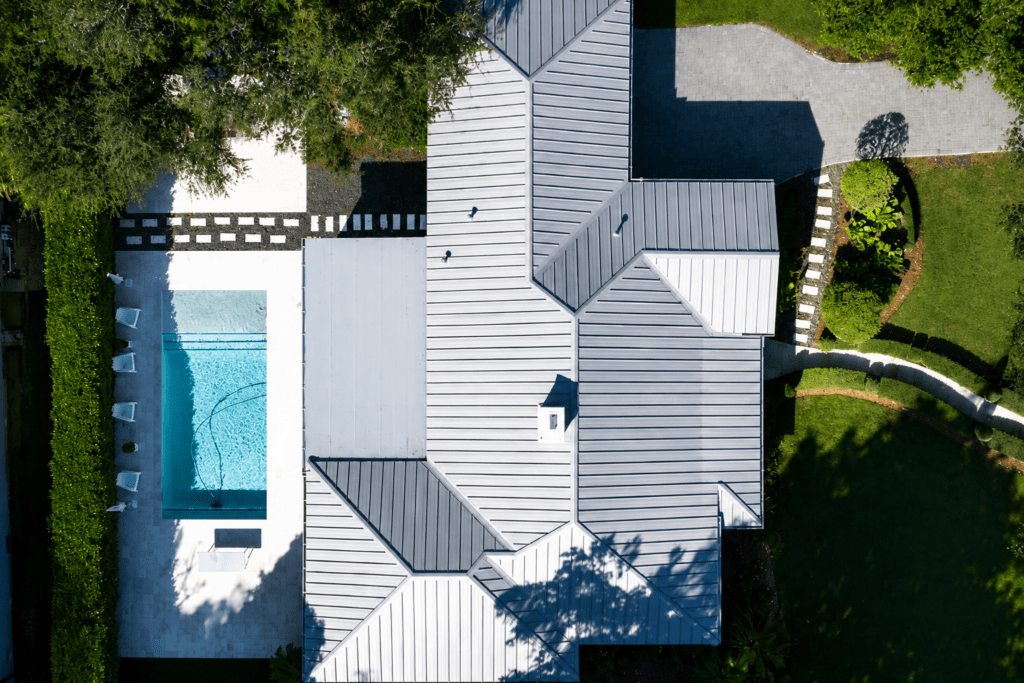
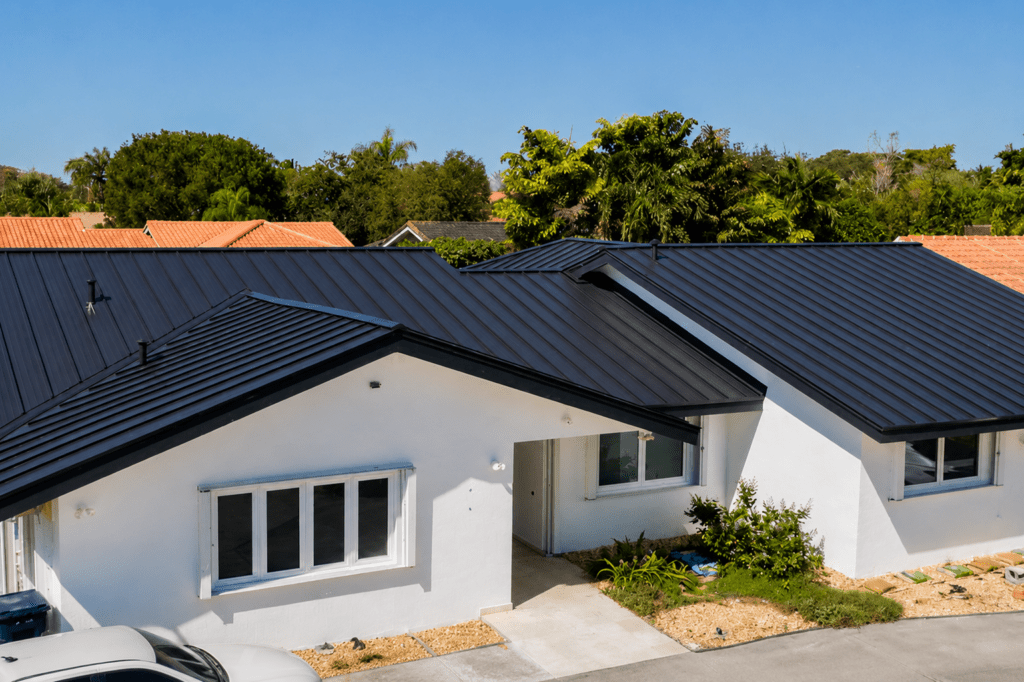
This is the reason metal roofing conversations have changed in Los Angeles over the last several years.
Much of the area we serve — Tujunga, La Cañada Flintridge, La Crescenta, Altadena, Montrose, and the foothill edges of Glendale and Pasadena — sits in or adjacent to a Very High Fire Hazard Severity Zone. In those areas the roof is not a cosmetic decision. Wind-driven embers landing on a roof are a primary mechanism of structure loss in wildfire, and the roof assembly is the first line of defence.
Metal roofing is non-combustible and achieves Class A fire ratings when installed over an appropriate underlayment assembly. Combined with ember-resistant venting and properly detailed eaves and valleys, it forms a genuinely defensible roof system.
Important nuance: the fire rating belongs to the assembly, not the metal alone. A metal panel over an inadequate underlayment does not automatically give you a Class A roof. We build the whole assembly to rating, and we will tell you what your zone requires.
Because metal is non-combustible, it is easy to assume a metal roof is automatically fire-rated. It is not, and the distinction is worth understanding before you sign anything.
Fire ratings are assigned to tested assemblies — the panel, the underlayment beneath it, and the deck, evaluated together. A steel or aluminium panel will not ignite, but embers do not need to ignite the surface. They need to find a gap and reach something combustible beneath. A metal panel over an unrated underlayment can still fail as an assembly.
A properly specified fire-zone metal roof means:
When you compare metal quotes in the foothills, ask what assembly is being installed rather than what gauge. See fire resistant roofing for the full picture.
California's Title 24 energy code includes cool roof requirements that apply to many re-roofing projects. The underlying idea is straightforward: a roof that reflects solar radiation rather than absorbing it keeps the attic cooler and reduces air conditioning load.
Metal roofing performs well here. Reflective and cool-rated finishes are widely available, and metal sheds absorbed heat quickly rather than holding it into the evening the way a dark asphalt roof does. On a west-facing roof in the San Fernando Valley — where summer afternoons are genuinely punishing — this is a measurable comfort difference, not a marketing claim.
Metal is also fully recyclable at end of life and is frequently manufactured with recycled content, which matters to some owners and to certain green building programs.
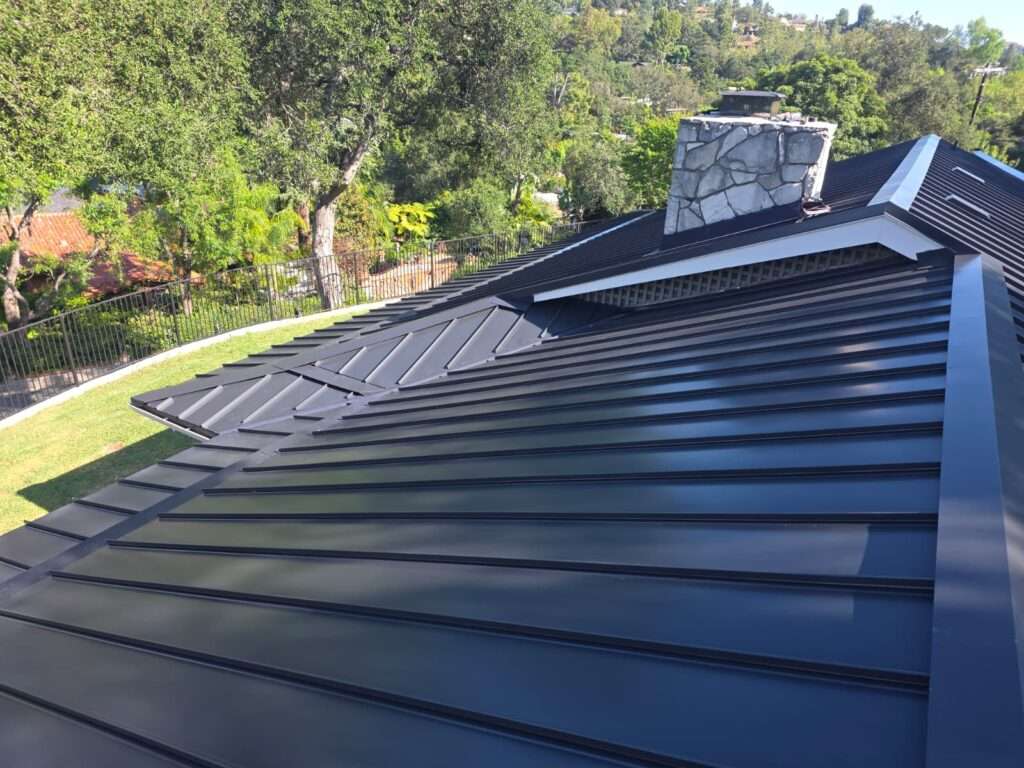
Corrosion resistance varies significantly between metal types and coatings. The inland valleys we primarily serve are far less aggressive than a coastal environment, but material selection still matters — particularly where dissimilar metals meet at flashings, which is a classic cause of premature galvanic corrosion in poorly specified metal roofs.
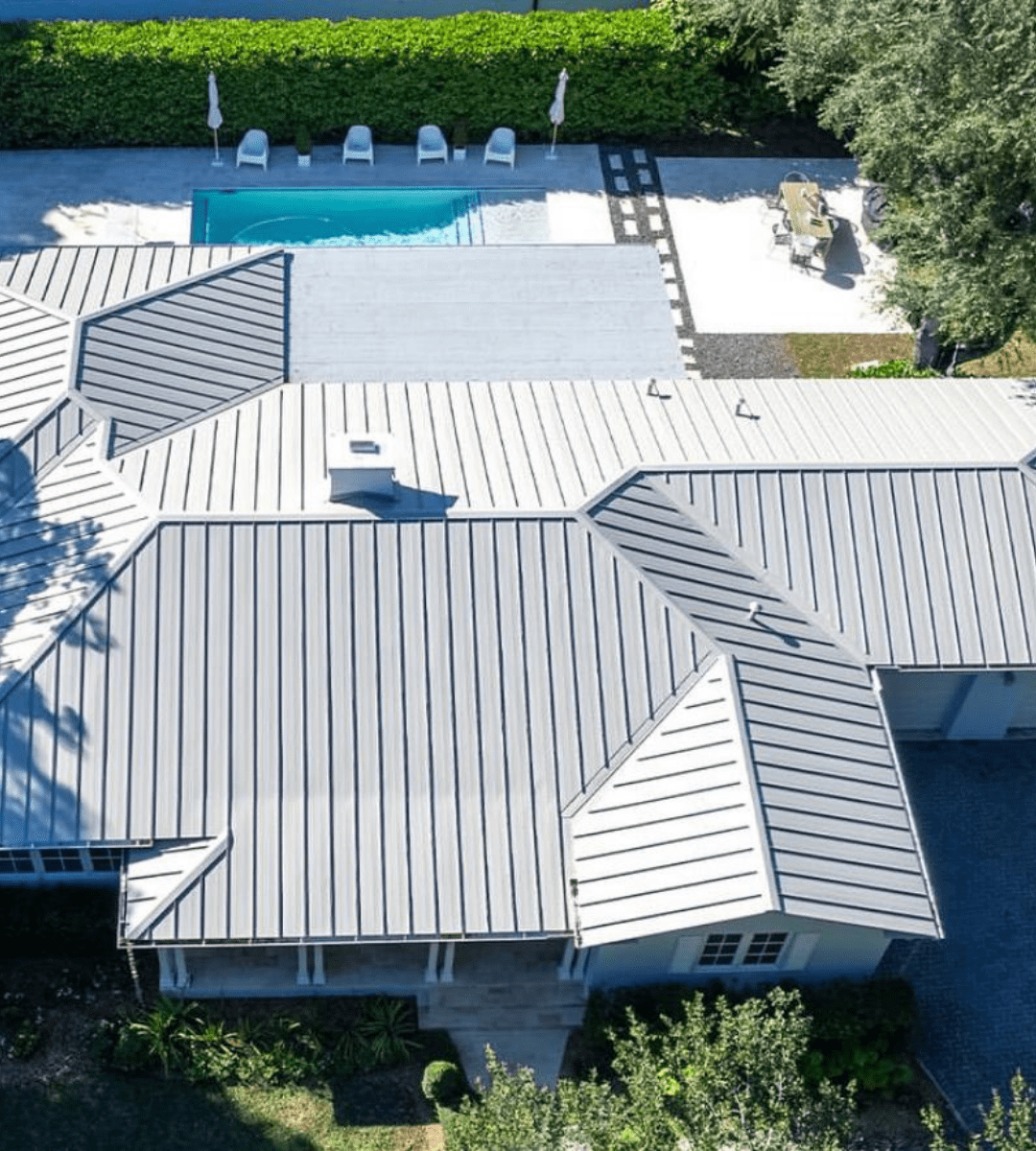
Metal roofing is a fabrication trade as much as a roofing trade. Panels must be cut, formed, and detailed correctly, thermal movement must be accommodated, and flashings must be executed cleanly. It is unforgiving of crews who are used to shingle work.
Metal carries a higher up-front cost than asphalt shingle and a substantially longer service life. What drives the specific number:
Metal is best evaluated over the ownership period rather than at the quote. A roof lasting 40 or more years against one lasting 20 changes the arithmetic considerably — particularly if you intend to stay in the house.
A properly installed metal roof commonly lasts 40 years or more, and standing seam systems frequently exceed 50 — roughly double the service life of architectural asphalt shingle. Installation quality at flashings, penetrations, and terminations affects real-world lifespan more than the panel specification, since that is where nearly all metal roof failures originate.
Metal is non-combustible and achieves Class A fire ratings when installed over an appropriate underlayment assembly, which makes it a strong choice in the foothill Very High Fire Hazard Severity Zones around Los Angeles. An important qualification: the fire rating applies to the complete assembly, not to the metal panel alone. Ember-resistant venting and properly detailed eaves and valleys are part of a genuinely defensible roof.
Not in a normal residential installation. The noise people associate with metal roofing comes from panels installed over open framing with no decking or insulation, as in a barn or shed. A residential metal roof is installed over solid sheathing with underlayment and sits above an insulated attic, which makes it comparable to other roof types in normal rain.
No — the opposite, when correctly specified. Reflective and cool-rated metal finishes reject solar radiation rather than absorbing it, and metal sheds heat quickly rather than holding it into the evening as dark asphalt does. Cool-rated metal finishes can satisfy California Title 24 cool roof requirements.
Standing seam conceals its fasteners beneath the seam, so there are no penetrations through the water plane, and panels float on clips to accommodate thermal movement. Corrugated uses exposed screws whose gaskets become wear points over time. Corrugated costs less and suits outbuildings and industrial use; standing seam is the better long-term choice for a home you plan to keep.
Sometimes, but we generally recommend against it. An overlay conceals the condition of the decking and underlayment beneath, adds weight, and California limits the number of roofing layers permitted to remain. Tear-off also allows the fire-rated assembly to be built correctly from the deck up, which matters in the foothill zones.
It can attenuate signal to some degree, as any metal surface will, though modern homes with in-building Wi-Fi and strong cellular coverage rarely see a practical issue. If you already have marginal cell reception, it is worth discussing before you commit.
It depends on how long you intend to own the property. Metal costs more up front and commonly lasts twice as long, so over a full ownership period the arithmetic often favours metal — particularly once you account for not paying for a second roof. In a fire hazard zone, the non-combustible assembly is a separate and arguably more important consideration than cost alone.
No. Fire ratings apply to tested assemblies — the panel, the underlayment and the deck together — not to the metal alone. A non-combustible panel installed over an unrated underlayment does not produce a Class A roof, because embers do not need to ignite the surface, only to find a gap and reach something combustible beneath. Ask any contractor what assembly they are installing, not just what gauge of metal.
Almost all of our metal roofing enquiries now come from one part of the map: the foothill communities sitting in or beside a Very High Fire Hazard Severity Zone. Tujunga — where we are based — along with Sunland, La Crescenta, La Cañada Flintridge, Montrose, Altadena, and the upper edges of Glendale and Pasadena.
That is not a coincidence. In those areas a non-combustible roof assembly stops being an aesthetic preference and becomes a practical decision about the building. We live and work in the same fire zone, so it is a conversation we have from the same side of the table. Ask about fire-rated assemblies.
We will assess your roof, your zone's fire requirements, and how long you plan to stay — then tell you honestly whether metal earns its cost on your specific house.
California Building Professionals is a family-run, licensed and insured roofing contractor based in Tujunga, serving the San Fernando Valley, San Gabriel Valley and Central Los Angeles. CSLB License #1150891. Roofing since 2014.