
We are based in Tujunga. Our own building sits in the same foothill fire corridor as most of the roofs we work on — Sunland, La Crescenta, La Cañada Flintridge, Montrose, Altadena, and the upper edges of Glendale and Pasadena. This is not a service line we added because it tested well. It is where we live.
If your home is in or near a Very High Fire Hazard Severity Zone, the roof is not a finish decision. It is the largest horizontal surface on your house and the one most exposed to wind-driven embers, which are the mechanism that destroys most structures lost in a wildfire — not the flame front itself.
What is the most fire resistant roof?
Class A is the highest fire rating a roof assembly can achieve, and clay or concrete tile, metal, and Class A rated asphalt shingle systems can all reach it. The critical point most homeowners miss is that the rating applies to the complete assembly — the covering, the underlayment, and the deck together — not to the surface material on its own. A non-combustible tile or metal panel installed over an unrated underlayment does not produce a Class A roof.
This is the single most important and most commonly misunderstood point in fire-resistant roofing, and it is where a lot of money gets spent badly.
Roof fire ratings — Class A, B and C, with Class A the highest — are assigned to a tested assembly: the roof covering, the underlayment beneath it, and the deck it sits on, evaluated together. A material is not "Class A" in isolation. It achieves Class A within a specific assembly.
The practical consequence: you can install genuine clay tile or standing seam metal — both entirely non-combustible — over the wrong underlayment and not have a Class A roof. The panel will not burn. The assembly can still fail, because embers do not need to ignite the surface. They need to find a gap, land on something combustible beneath, and smoulder.
When you compare quotes, ask what assembly is being installed, not what material. A quote that names a tile profile and a price, with nothing about underlayment or rating, is not answering the question that matters in a fire zone.
| Material | Fire performance | Practical notes for the foothills |
|---|---|---|
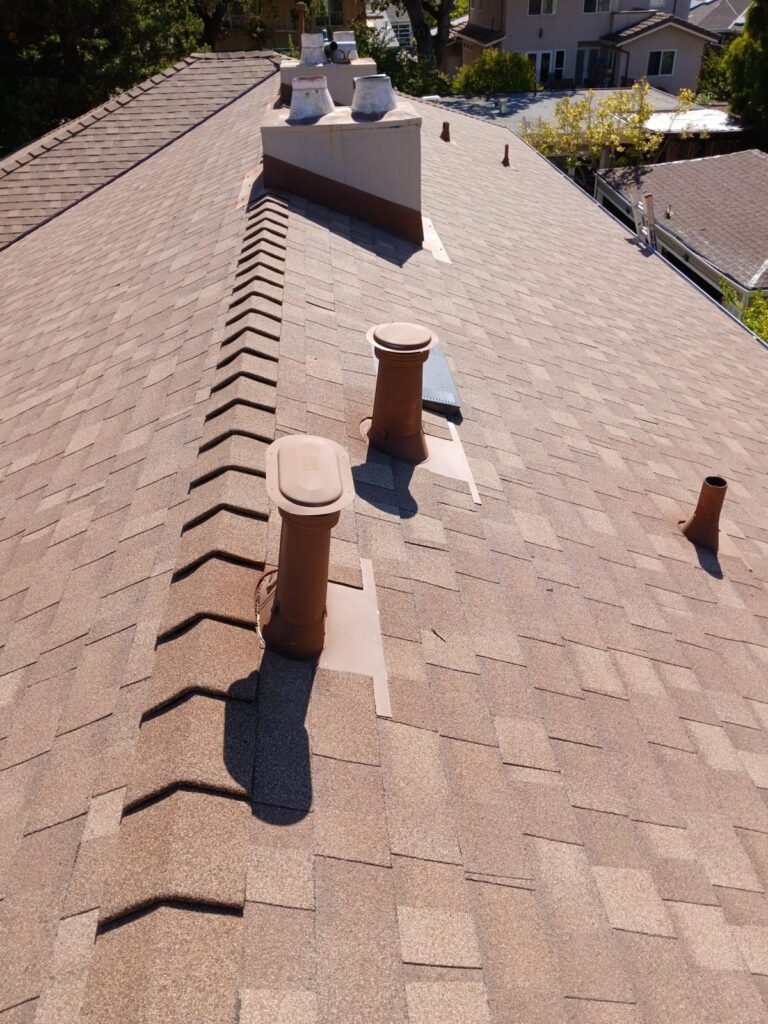
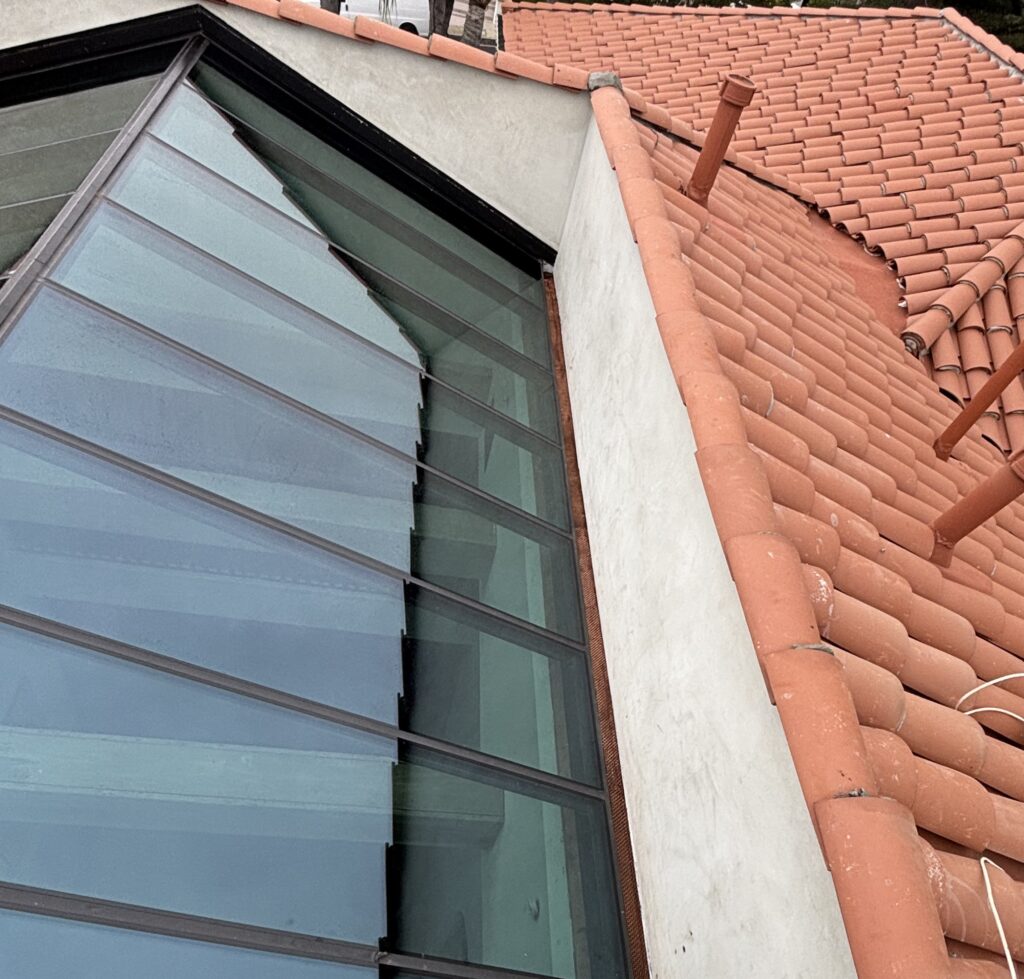
| Clay or concrete tile | Non-combustible; Class A in appropriate assemblies | Excellent performer and correct for the region's architecture. Bird stops and end closures at the eaves matter — open tile ends are an ember entry path |
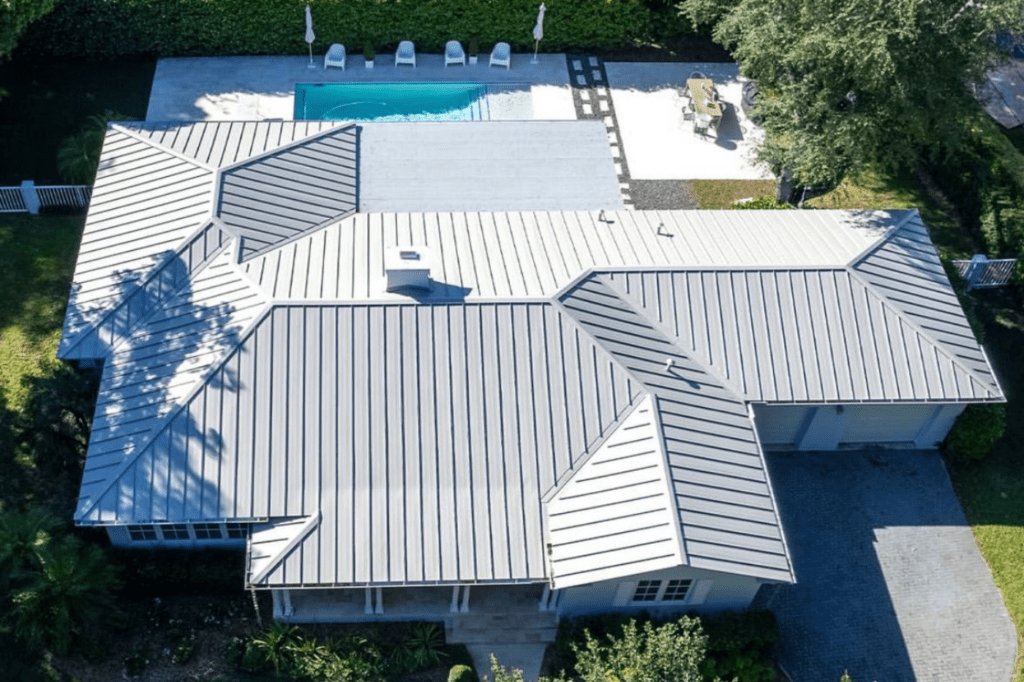
| Standing seam metal | Non-combustible; Class A in appropriate assemblies | Concealed fasteners mean no penetrations through the water plane. Sheds embers well; 40+ year service life |
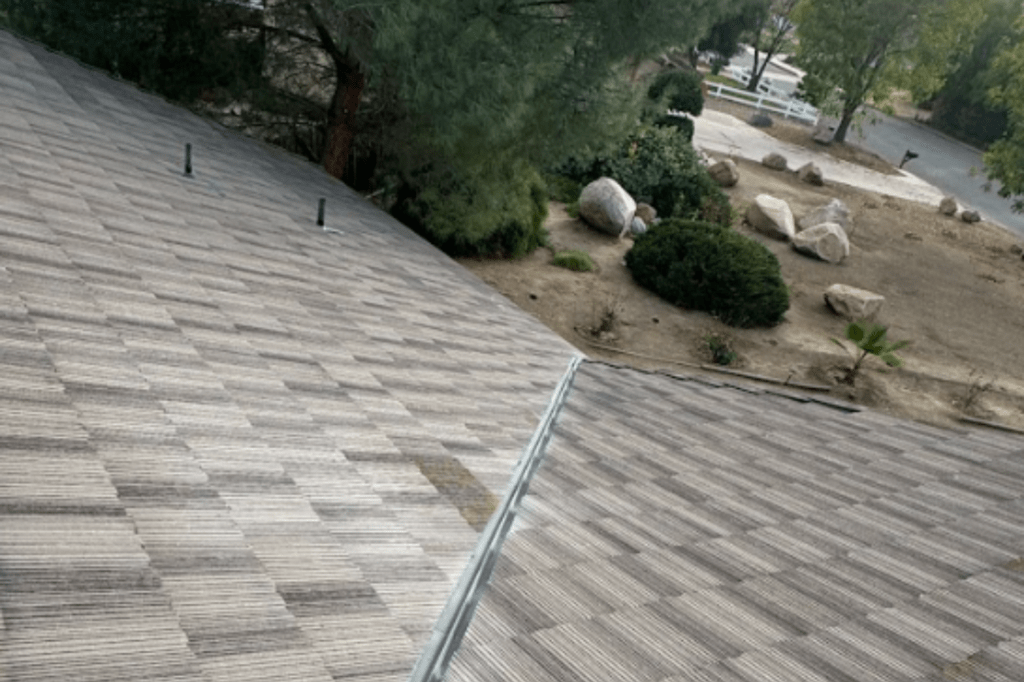
| Class A asphalt shingle | Class A rated products available and permitted | Lower cost and legitimate where permitted. Many foothill owners still choose tile or metal for additional margin |
| Flat / low-slope membrane | Class A assemblies available | Rating depends heavily on the full build-up. Specify carefully |
| Wood shake | Poor | Not appropriate in these zones and generally not permitted for replacement |
Tile and metal are the two we install most often in the foothills, and the honest difference between them is usually architecture and budget rather than fire performance — both perform well in a correctly built assembly.
Most homes lost in a wildfire are not consumed by an advancing wall of flame. They are ignited by embers carried well ahead of the fire on the wind, which land, accumulate, and find something to catch. A roof can be entirely non-combustible on its surface and still lose the house through a gap.
The failure points we look at:
A fire-resistant roof is a system: rated assembly, ember-resistant venting, closed eaves, sealed tile ends, clean valleys and gutters. Getting the covering right and leaving the vents alone addresses maybe half the problem.
California has building standards specifically for construction in Wildland-Urban Interface areas — commonly referred to as Chapter 7A of the California Building Code — which govern roofing, venting, eaves, exterior walls and windows in designated fire hazard zones. CAL FIRE and local agencies maintain the Fire Hazard Severity Zone maps that determine where these apply.
In broad terms, in a Very High Fire Hazard Severity Zone a roof replacement is expected to result in a Class A assembly, and vents are expected to be ember-resistant and listed for the purpose. Requirements are also triggered when you replace a significant portion of an existing roof, not only on new construction.
Two practical points:
We pull permits and build to the applicable requirement. If a contractor in these communities is vague about which assembly they are installing or whether vents are covered in the scope, that is a meaningful signal.
Fire-zone insurance in California has become difficult, and roofing is one of the few parts of it a homeowner can directly influence.
We are roofers, not insurance brokers, and we will not tell you what any carrier will do. What we can tell you is that insurers and programs assessing wildfire risk generally look at roof class, vent type, and eave construction among other structure-hardening factors — and that being able to document a Class A assembly and listed ember-resistant venting is materially better than believing you have them.
Keep that paperwork. If you are going through a carrier review or a mitigation program, having it is worth more than describing the work from memory.
If your roof has taken fire or heat damage, the assessment is different from a normal repair inspection. Heat damages roofing well beyond where scorching is visible — underlayment can be compromised, sealant strips on shingles can release, metal can distort, tile can spall or crack from thermal shock, and decking can be weakened without any obvious char.
We inspect for heat exposure as well as direct damage, document conditions thoroughly for insurance purposes, and tell you honestly where the boundary between damaged and sound material actually sits — which is frequently further out than it looks.
If there is active water entry now, see emergency roof repair. For documentation ahead of a claim, see roof inspection.
The reason to use a foothill roofer for a foothill roof is not sentiment. It is that we work in these zones constantly, we know how the local building departments handle Chapter 7A requirements, and we are close enough to actually be here.
Fire-rated work is quoted after inspection, and after we confirm what your specific parcel requires. The variables:
Vent and eave work is often a modest fraction of a re-roof and disproportionately valuable in a fire zone. If budget is constrained, we will tell you which parts of the system return the most protection per dollar.
Class A is the highest fire rating a roof assembly can achieve. Critically, the rating applies to the complete assembly — the roof covering, the underlayment beneath it, and the deck — tested together, rather than to the surface material alone. Clay and concrete tile, metal, and Class A rated asphalt shingle systems can all reach Class A within an appropriate assembly. A non-combustible covering installed over an unrated underlayment does not produce a Class A roof.
Clay or concrete tile and metal are the most fire resistant common roofing materials, both being non-combustible and capable of Class A performance in appropriate assemblies. Class A rated asphalt shingle systems are also permitted and legitimate. In practice the choice between tile and metal in a fire zone usually comes down to architecture, weight and budget rather than fire performance, since both perform well when the assembly is built correctly.
In California’s designated fire hazard zones, roof replacement is generally expected to result in a Class A assembly, and vents are expected to be ember-resistant and listed for the purpose. These requirements come from the Wildland-Urban Interface provisions of the California Building Code and are typically triggered by replacing a significant portion of an existing roof, not only by new construction. Zone maps and local amendments change, so we confirm the current requirement for your specific parcel.
Ember-resistant vents are attic, soffit and gable vents designed and listed specifically to resist the entry of wind-blown embers. They matter because most homes lost in wildfire are ignited by embers landing ahead of the fire rather than by direct flame, and ordinary vents allow embers straight into an attic. In designated fire hazard zones they are generally required on replacement, and retrofitting them to an existing house is one of the highest-value hardening measures available.
We cannot tell you what any carrier will do, and we would be wary of any roofer who claims otherwise. What is true is that insurers and wildfire mitigation programs generally consider roof class, vent type and eave construction among structure-hardening factors. Being able to document a Class A assembly and listed ember-resistant venting — with permit records and photographs — puts you in a far better position than describing the work from memory.
Both are non-combustible and both achieve Class A in appropriate assemblies, so neither has a decisive fire advantage over the other. Metal lasts longer, weighs less and sheds embers cleanly. Tile suits the region’s architecture and performs excellently, but needs bird stops or end closures at eaves and ridges, since open tile ends otherwise create ember pockets. The decision usually comes down to the house rather than the fire rating.
You can check your property’s Fire Hazard Severity Zone designation through CAL FIRE’s published maps and confirm it with your local building department — the City of Los Angeles, Glendale, Pasadena, La Cañada Flintridge, or Los Angeles County for unincorporated areas such as Altadena. Zone designations have been updated in recent years, so it is worth checking current maps rather than relying on what was true previously.
Yes, and the assessment differs from a normal repair inspection. Heat damages roofing well beyond visible scorching — underlayment can be compromised, shingle sealant strips can release, metal can distort, tile can crack from thermal shock, and decking can weaken without obvious charring. We inspect for heat exposure as well as direct damage, document conditions for insurance, and identify honestly where sound material actually begins.
Our service area runs along the base of the Verdugos and the San Gabriels, and a large share of it sits in or beside a Very High Fire Hazard Severity Zone: Tujunga, Sunland, La Crescenta, La Cañada Flintridge, Montrose, Altadena, Sierra Madre, and the upper foothill edges of Glendale and Pasadena.
These communities share a specific roofing profile — older tile housing stock, significant Santa Ana wind exposure, mature trees dropping debris into valleys and gutters, and Chapter 7A requirements on replacement. It is a different set of problems from the Valley floor, and it is the work we do most.
We also serve Burbank, Studio City, Sherman Oaks, Encino and San Marino. See all areas served.
We will confirm your parcel's current requirement, inspect the roof, vents and eaves, and tell you what a compliant assembly looks like for your house — including which measures return the most protection if budget is tight.
California Building Professionals is a family-run, licensed and insured roofing contractor based in Tujunga, serving the San Fernando Valley, San Gabriel Valley and Central Los Angeles. CSLB License #1150891. Roofing since 2014.